
The Mothers Remember | July Reflections
Every Birthday Tells a Story
This year, we celebrated my grandson Owen’s birthday on July 4. Every new child is another branch on the family tree, a reminder that each generation begins with hope.
A few days later, I thought of my sister Evelyne and my niece Nariah. Although they were born in different years, they share the same birthday—July 10. That means that on July 9, years apart, my mother was laboring as she waited to welcome Evelyne into the world, and later my sister Finny was doing the same as she prepared to welcome her daughter, Nariah.
Then my thoughts turned to another July memory. On July 17, twenty-nine years ago, I stood beside my sister Evelyne as she gave birth to her daughter, Diana. Being present for Diana’s birth remains one of the great privileges of my life.
Moments like these remind me that every birth carries more than the story of a child. It also carries the story of the mother who labored, the family who waited, and the world into which that child arrived.
Then, as I looked at those same dates on the calendar, I discovered another July 9.
On or around that day in 1860, the Clotilda—the last known ship to bring captive Africans illegally into the United States—entered Mobile Bay.
The contrast was impossible to ignore. While the women in my family welcomed new life into the world across generations, countless African mothers arriving aboard the Clotilda carried unimaginable grief. They had been torn from their homes, separated from their children and loved ones, stripped of their languages, and thrust into an unknown future.
Every birthday tells a story.
Some begin with celebration.
Others begin with loss.
Yet all become part of something larger than themselves.
Those thoughts accompanied me as I traveled through the American South on my way to the 10th National Conference on Community and Restorative Justice in New Orleans. I did not realize then how deeply the journey itself would shape my understanding of memory, justice, and hope.
Africatown: More Than a Ship
My first stop was Mobile, Alabama, where I visited Africatown Heritage House.
Before arriving, I expected to learn about a ship.
Instead, I learned about a people.
The story of the Clotilda did not end when its passengers stepped ashore. After emancipation, many of the survivors established Africatown, preserving language, culture, faith, and identity despite everything that had been taken from them.
What struck me most was how easily history can reduce a human life to a few facts—a name, a date, a place.
Yet behind every name was someone who laughed, worked, loved, grieved, dreamed, and belonged to a family and a community. A name alone is never the whole story.
One life especially stayed with me: Matilda McCrear.
She was only two years old when she arrived aboard the Clotilda. She lived through slavery, emancipation, Reconstruction, Jim Crow, the Great Depression, and two world wars.
She reminds us that people are always more than what happened to them.
Africatown: More Than a Ship
My first stop was Destrehan Plantation in Louisiana.
As a Kenyan, seeing Lupita in that story created a personal connection for me. But standing at Destrehan, I found myself thinking beyond the film. What happens to the stories of the people whose lives were lived on that land? What remains when history has been suppressed for so long that only fragments survive?
And what does it take to bring those stories back into view?
Destrehan: When Silence Speaks
My first stop was Destrehan Plantation in Louisiana. I arrived at a place whose history had, for generations, been submerged—buried beneath the architecture, the preserved rooms, and the stories most often told about the plantation. Later, Destrehan gained another kind of notoriety when it became one of the locations used in the filming of 12 Years a Slave, the film that brought the story of Solomon Northup to a global audience and featured our very own Lupita Nyong’o, whose roots reach back to Kenya.
As a Kenyan, seeing Lupita in that story created a personal connection for me. But standing at Destrehan, I found myself thinking beyond the film. What happens to the stories of the people whose lives were lived on that land? What remains when history has been suppressed for so long that only fragments survive?
And what does it take to bring those stories back into view?
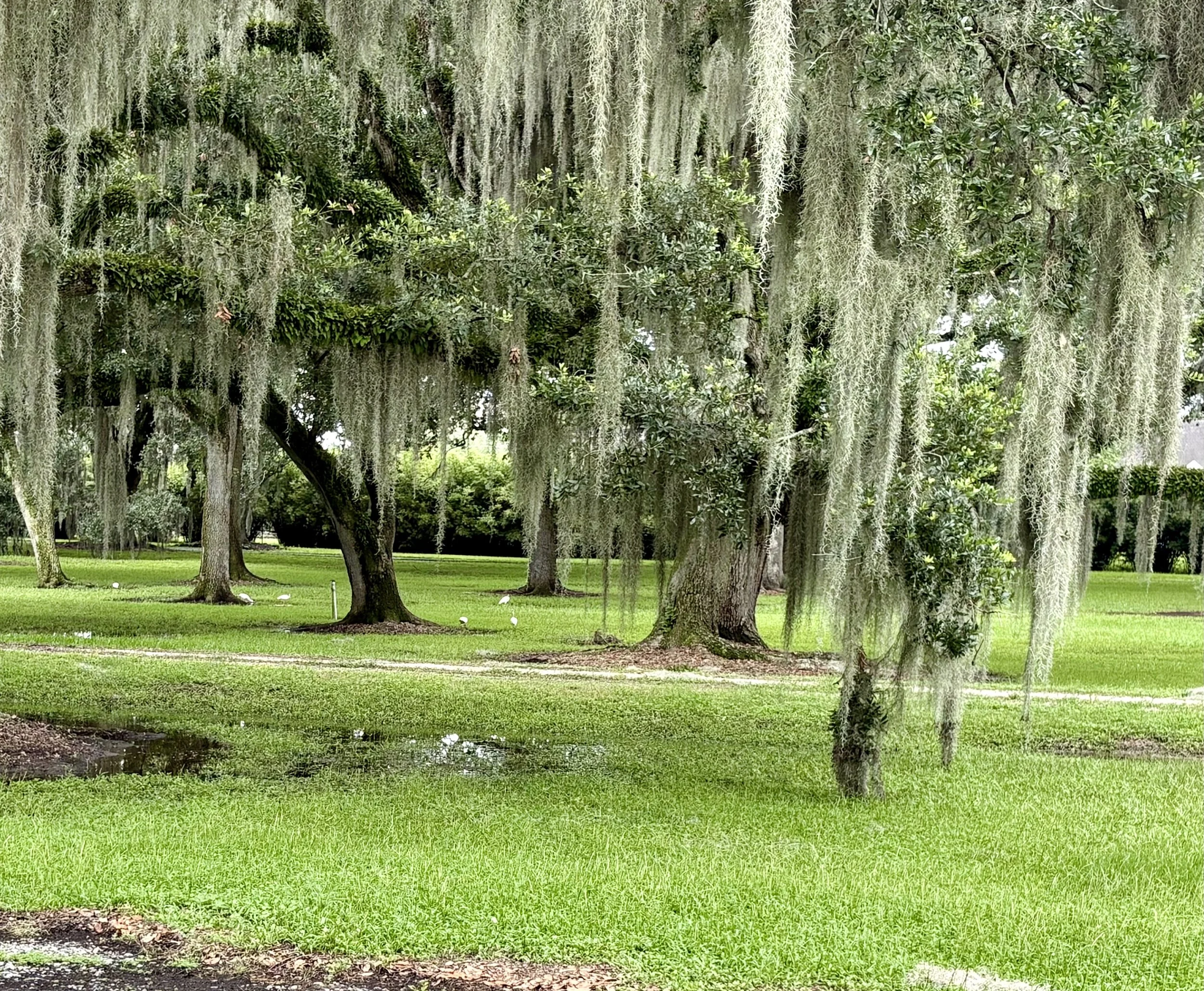
The beauty of the landscape cannot erase what happened there.
The land remembers.
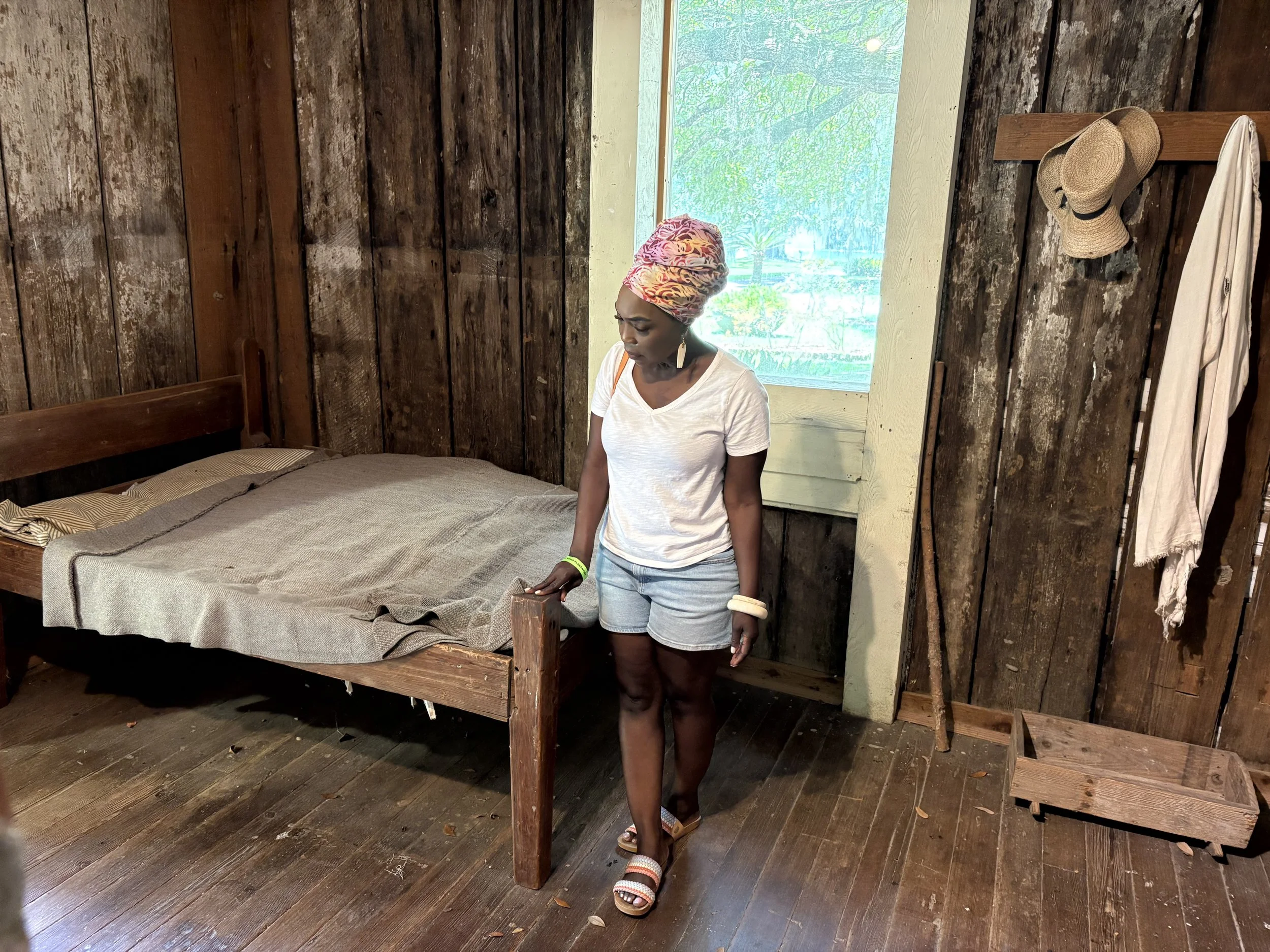
There I learned more about the 1811 German Coast Uprising and the courage of Marie Rose, an enslaved woman executed for her participation.
History tells us very little about her.
Only fragments remain.
Perhaps those silences remind us not that these women had no stories, but that many were never allowed to tell them in their own voices.
Even in silence, Marie Rose still speaks.
New Orleans: Restoring Humanity
The journey concluded in New Orleans at the 10th National Conference on Community and Restorative Justice.
Throughout the conference I met practitioners, survivors, educators, community leaders, and formerly incarcerated people whose lives challenged many assumptions about justice.
Again and again I encountered one simple truth:
A person’s worst moment should never become the final definition of their life.
One presenter who especially moved me was Sister Helen Prejean, author of Dead Man Walking.
She spoke about Angola Prison—a place built on the grounds of a former plantation—and described the path toward prison as “a greased track,” shaped by poverty, racism, trauma, and unequal opportunity.
Her words reminded me that understanding harm is not the same as excusing it.
If we hope to prevent harm, we must first understand the roads that lead people there.
Accountability and compassion belong together.
What the Mothers Remember
As I traveled from Africatown to Destrehan and finally to New Orleans, I began to see one thread connecting each place.
In Africatown, I saw women and men preserving identity.
At Destrehan, I encountered courage that survived even when stories did not.
In New Orleans, I met people working every day to create communities where accountability and hope can exist together.
When I think again of Owen’s birthday, I realize that every generation inherits more than family traditions.
We inherit stories.
We inherit memory.
We inherit unfinished work.
And we inherit the responsibility to decide what comes next.
The mothers remember.
The land remembers.
Communities remember.
Our task is not simply to preserve the past, but to learn from it—to tell the stories that were nearly lost, to honor the humanity of those who came before us, and to build communities where future generations inherit more justice, compassion, and hope than we ourselves received.
Perhaps that is the greatest gift we can leave our children.
The mothers remember.
And so must we.
A Question to Carry Forward
What stories have been carried to you, and which ones will you choose to carry forward?
Warmly,
KeruBo